

VS Factory Datejust replicas are often discussed through movement names and factory rankings, but those labels can hide the more useful question: does a particular watch reproduce the proportions and details of the Datejust reference it is meant to resemble? The earlier version of this article mixed women’s sizing, factory claims and untested power-reserve statements. This revision separates those subjects and focuses on observable differences.
36 mm and 41 mm Datejust models should not be judged the same way
The 36 mm Datejust has a compact, traditional profile. Small errors in lug shape, bezel width or bracelet fit become noticeable because the case has less visual mass. The 41 mm format gives a replica more space, but it also makes the dial, rehaut and bezel relationship important. A 41 mm case that is merely enlarged from a smaller design can look too broad through the lugs or too thick at the case flank.
Rolex’s current Datejust 36 reference 126200 uses manufacture calibre 3235 and remains 36 mm in diameter. Replica watches marketed with “3235 clone” movements should therefore be understood as attempts to imitate part of that generation’s architecture or appearance, not as genuine Rolex calibres.
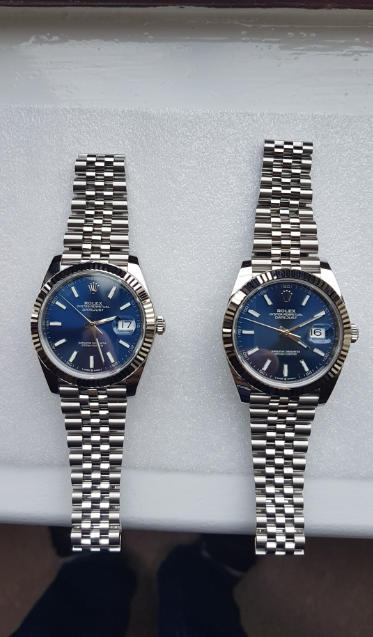
Dial colour and texture are harder than specifications suggest
Green, blue and patterned Datejust dials change substantially under direct light. A photograph taken under cool LEDs can make one dial appear closer to genuine than it does in daylight. Rather than relying on a factory name, compare the consistency of the sunburst effect, marker alignment, crown placement and date-window proportions.
The Cyclops lens and date printing remain useful checkpoints. Magnification that is too strong or too weak changes the balance of the dial. The date should appear centred through the lens, and the transition between the crystal, rehaut and bezel should not look unusually tall.
The bracelet and clasp often reveal the real quality level
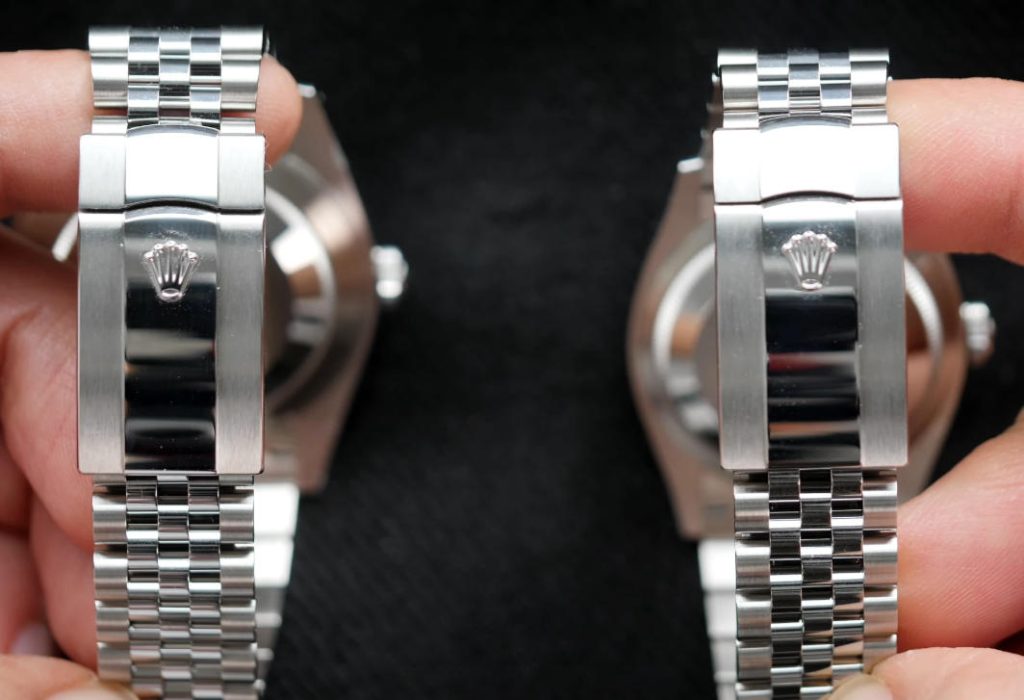
Datejust replicas can look polished in photographs while still feeling rough in daily wear. Check how the end links meet the case, whether the bracelet articulates freely, and whether polished and brushed surfaces remain clearly separated. On Jubilee-style bracelets, the centre links should move smoothly without excessive looseness. On Oyster-style bracelets, uneven brushing is easier to spot because the surfaces are broader.
Clasp engraving and decorative finishing matter, but mechanical fit matters more. A clasp that closes consistently and has clean edges contributes more to a convincing watch than an elaborate internal engraving that is rarely seen.
Movement claims need real-world caution
A claimed 70 or 72 hour reserve should not be repeated as fact unless the specific replica movement has been tested. The same applies to accuracy figures and statements that one factory has the “best” clone movement. Replica production can change between batches, and two watches sold under the same factory label can still differ in regulation or assembly quality.
Pondwatch therefore treats factory names as context rather than proof. When comparing Datejust replicas, the practical hierarchy is straightforward: correct reference proportions, clean dial and date execution, reliable crown and movement operation, comfortable bracelet construction and realistic after-service options. Readers can see related model coverage in the Rolex archive.