
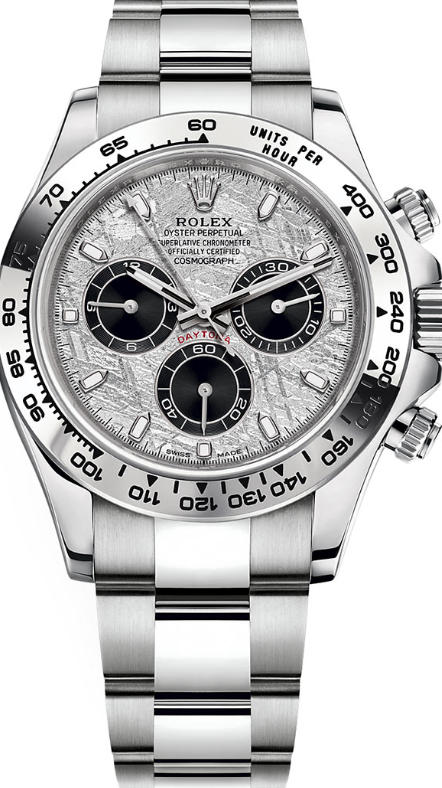
A white-gold-style Cosmograph Daytona on leather has a very different character from the steel bracelet versions that dominate modern Daytona discussion. The combination of a grey dial, polished precious-metal look and dark leather strap makes the watch more restrained, but it also makes proportion and finishing easier to judge. The original version of this article overstated the replica’s movement, materials and water resistance. This update concentrates on what can be assessed without treating marketing language as technical evidence.
The Daytona layout is difficult to imitate cleanly
The Daytona is defined by a compact 40 mm chronograph format, three counters and a tachymetric bezel. A replica can look convincing at first glance yet feel wrong when the dial spacing, pusher position or bezel typography is examined closely. On grey-dial versions, the contrast between the main dial and the subdials is especially important because small differences in tone change the whole watch.
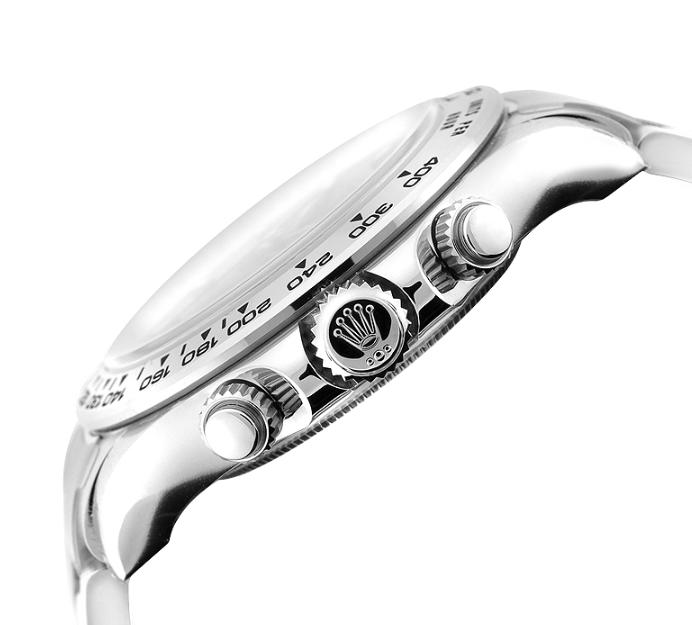
The case should not look excessively thick through the mid-case, and the lugs need to flow into the strap or end pieces without abrupt steps. Chronograph pushers and the winding crown should line up cleanly. On an older leather-strap configuration, the strap quality and clasp construction matter because there is no Oyster bracelet to dominate the wrist presence.
Movement labels should be treated as descriptions, not certifications
The earlier article incorrectly described the replica as containing a genuine Swiss Rolex-style chronograph calibre. A replica Daytona does not become equivalent to a genuine Rolex movement because a seller uses the words “4130”, “4131” or “Swiss”. Genuine Rolex Daytona movements are manufacture calibres with their own architecture, testing and parts standards. Replica movements may imitate visual layout or chronograph function, but their serviceability and quality vary.
For a practical assessment, check whether the chronograph starts, stops and resets cleanly, whether the hands return exactly to zero, and whether operating the chronograph affects timekeeping. Those observations are more meaningful than claims about proprietary lubricants, chronometer certification or shock resistance that have not been independently verified.
Grey dial, bezel and strap are the visual priorities
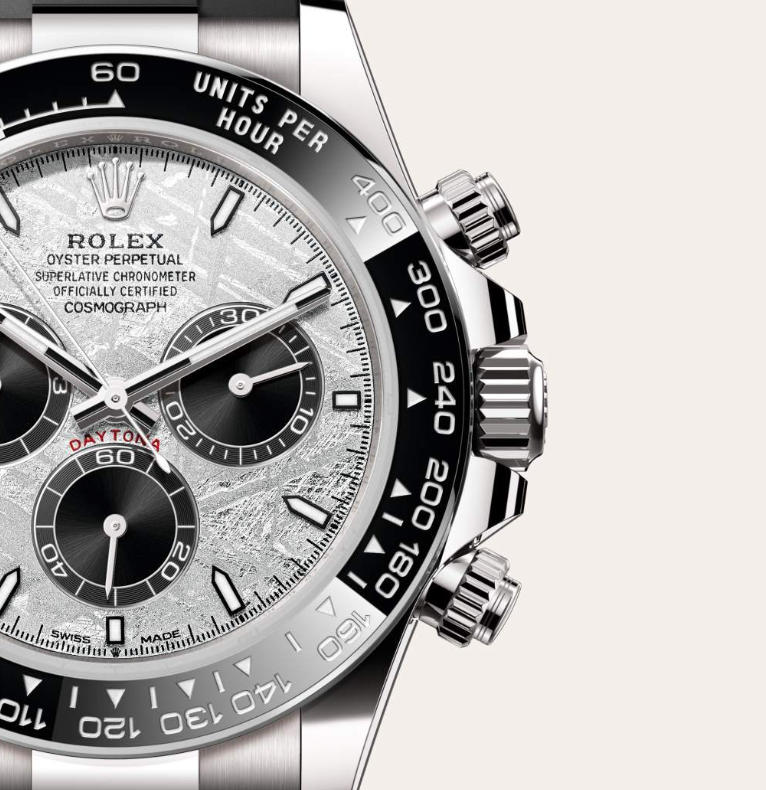
The dial should be judged for print sharpness, subdial depth, hand length and marker alignment. A grey dial can appear warmer or cooler under different lighting, so a single heavily edited photograph is not enough to establish colour accuracy. The tachymetric scale should be evenly printed or engraved and should remain legible around the full bezel.
Leather also changes the way the watch sits. A thick, padded strap can make a replica feel top-heavy; a thinner strap can bring the case closer to the wrist. Stitching, edge paint and the fit between strap and case are therefore worth checking. These are ordinary construction details, but they often reveal more about overall quality than a long specification list.
Where this older replica still fits in Pondwatch coverage
This article remains useful because it records an older Daytona style that is less common than today’s Oysterflex and bracelet configurations. It should not be read as a buying endorsement. Instead, it shows how a replica can be evaluated by separating genuine Daytona design cues from unverified factory claims.
Readers comparing other Rolex chronographs can continue through Pondwatch’s Rolex coverage, where newer articles place more emphasis on reference-specific design, movement architecture and visible differences rather than promises of perfect replication.