
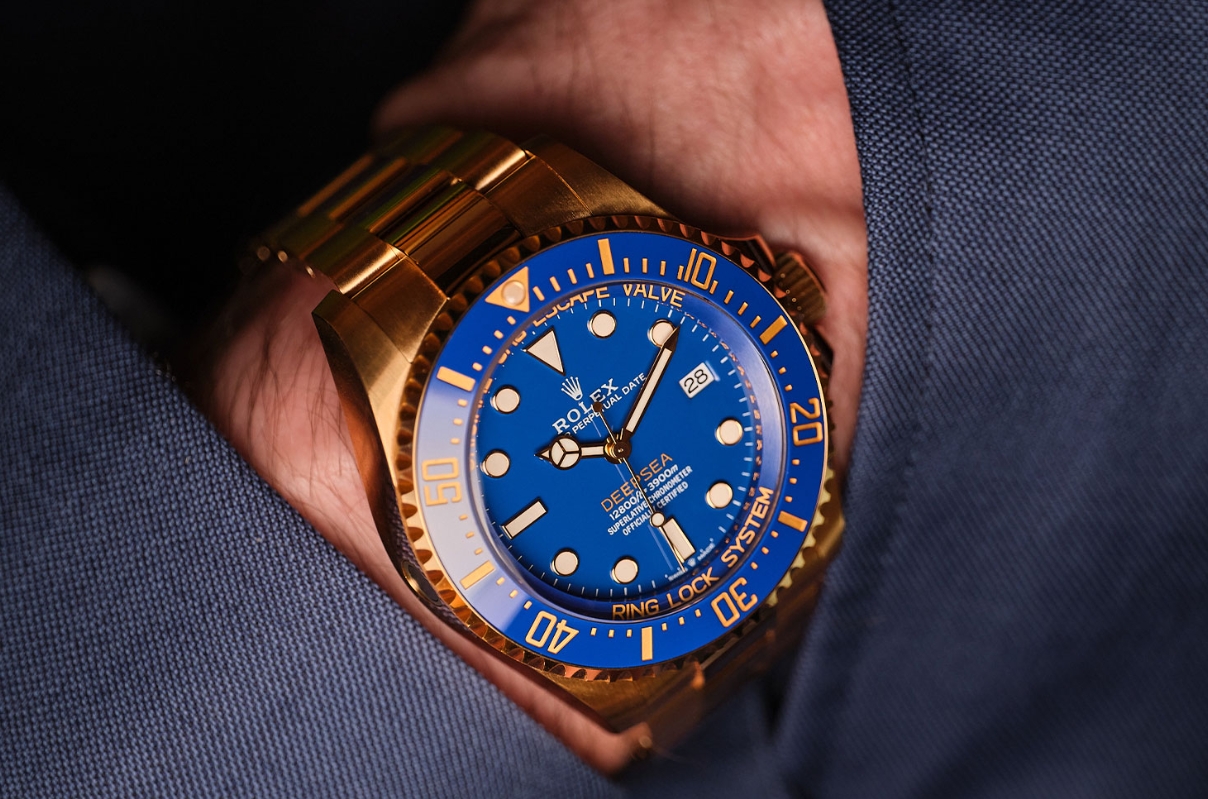
Choosing a replica watch involves more than finding a familiar design at an attractive price. Differences in movement quality, case finishing, bracelet construction and quality control can have a noticeable effect on how a watch looks, feels and performs over time. For UK buyers comparing different options, understanding these details before ordering can help set realistic expectations and avoid unnecessary disappointment.
Whether you are interested in a classic dive-watch design, a sporty chronograph or an everyday automatic timepiece, the most useful approach is to look beyond promotional descriptions. Product specifications, clear photographs, functional demonstrations and transparent delivery terms provide a much better basis for comparing watches.
1. Understand the Movement Before Comparing Prices
The movement is one of the most important components of a watch. It determines how the hands are driven, how time is maintained and which additional functions the watch can support. However, terms such as Swiss movement, Japanese movement and automatic movement describe different characteristics and should not be treated as interchangeable quality grades.
Swiss and Japanese Movements
Swiss and Japanese movements cover a range of designs, manufacturers and performance levels. The country associated with a movement does not, by itself, establish its accuracy, reliability or service life.
When comparing a replica watch, look for the following information:
- Movement identification: Check whether the manufacturer and calibre are specified rather than relying on a generic description.
- Movement type: Establish whether the watch uses a quartz, automatic or manually wound mechanism.
- Timekeeping performance: Look for measurable accuracy information and ask how it was assessed.
- Maintenance: Understand the expected servicing requirements and whether replacement parts are available.
Quartz movements generally offer straightforward operation and can provide consistent timekeeping with relatively little routine attention. Automatic movements use a mechanical mainspring and a winding mechanism, making their construction and maintenance requirements different.
Neither category should automatically be considered superior in every respect. The right comparison depends on the actual movement, its condition, the intended use and the quality of the watch’s assembly.
2. Look Beyond the Dial: Case, Bracelet and Finishing Quality
Two watches may appear similar in a product photograph but feel noticeably different on the wrist. Case finishing, bracelet construction, clasp operation and the alignment of individual components all contribute to the overall impression of quality.
Case Finishing
Examine the transitions between brushed and polished surfaces. Look for consistent finishing, even edges and clean transitions around the lugs, bezel and case sides. Poorly executed finishing may be easier to identify in close-up photographs than in a standard front-facing product image.
Bracelet and Clasp
The bracelet deserves the same attention as the watch head. Check whether the links appear evenly finished, whether the clasp closes securely and whether the product specifications explain the bracelet material. Excessive looseness, rough edges or inconsistent finishing may indicate that further questions are needed.
Crystal, Bezel and Dial Alignment
Look for clear dial printing, evenly positioned markers, consistent hand alignment and a bezel that sits correctly in relation to the dial. If sapphire crystal is advertised, check that the specification applies to the exact model being offered rather than assuming that every watch in a collection uses the same material.
Materials such as stainless steel, ceramic and sapphire crystal should be identified accurately. A premium-sounding material description is not a substitute for clear specifications or reliable supporting evidence.
3. Check Whether the Advertised Functions Actually Work
Chronographs, rotating bezels and additional dial displays can make a watch more visually complex, but appearance alone does not establish functionality. Buyers should distinguish between decorative details and features that perform the task described in the listing.
Chronograph Operation
If a watch is advertised as having a working chronograph, check whether the timing function starts, stops and resets correctly. Find out what each sub-dial measures, since some displays may show running seconds or other information rather than elapsed time.
A clear demonstration of the actual model can be useful when a particular function is important to your decision. Do not assume that every pusher or sub-dial is operational simply because it appears in the photographs.
Automatic Movement Performance
For an automatic watch, ask about timekeeping performance, winding operation and any stated power reserve. Power reserve refers to how long a fully wound mechanical movement can continue running without additional winding, subject to the movement and operating conditions.
Published specifications should relate to the actual movement fitted to the watch. If the seller cannot identify the mechanism or substantiate an important performance claim, treat that information as unconfirmed.
Water Resistance
A dive-watch appearance does not establish that a watch is suitable for swimming or diving. Water resistance depends on the construction, seals, condition and testing of the individual watch.
Check the stated rating and the manufacturer’s usage guidance. Unless suitable performance has been established, do not rely on a watch for water exposure simply because the product description uses terms such as dive-ready or waterproof.
4. Use QC Photos to Assess the Actual Watch
Quality-control photographs can provide a more useful view of a watch than standard catalogue images, particularly when they show the actual item prepared for dispatch. Their value depends on how clearly they represent the product and which details they allow the buyer to inspect.
When reviewing QC photographs, pay attention to:
- Dial details: Look for uneven markers, inconsistent printing or visible alignment issues.
- Hands and indices: Check their positioning and whether the overall dial appears symmetrical.
- Case and bracelet: Review the finishing, visible scratches, clasp condition and link alignment.
- Bezel alignment: Compare the bezel markings with the dial and the product description.
- Image consistency: Confirm that the photographs correspond to the model and configuration being discussed.
QC photographs have limitations. Lighting, camera angles and image resolution can conceal small defects, while photographs cannot independently establish movement accuracy, internal construction or water resistance.
For a useful comparison, request clear, well-lit photographs of the dial, case sides, caseback, bracelet and clasp where available. If a seller provides a video, check whether it demonstrates the actual watch and any functions you want to verify.
When comparing online retailers, the product descriptions and available inspection information on ReplicaMade.io can be considered alongside the specifications and evidence supplied by other sellers. As with any retailer, review the information for the specific model rather than assuming that every product shares the same components or quality standards.
5. Understand the Difference Between Processing and Delivery
Shipping estimates are another important consideration for UK buyers. A seller may quote one period for preparing an order and a separate period for transporting the parcel. These stages should be understood independently.
Order Processing
Processing can include order confirmation, preparation, any stated inspection procedures, packaging and dispatch arrangements. The length of this stage depends on the seller’s actual operations and the availability of the product.
Transit Time
Transit begins when the parcel enters the carrier’s delivery network. A tracking number may be created before the carrier physically receives the shipment, so the tracking status should be interpreted accordingly.
For example, if processing takes three business days and transit is estimated at another five to eight business days, the combined estimate is eight to eleven business days, assuming the stages occur consecutively and no additional delays arise.
This is an illustration rather than a delivery promise. Actual timing depends on the dispatch date, carrier service, destination and any customs procedures that apply.
Before placing an order, confirm:
- The stated processing period and estimated transit period.
- Whether the estimates use business days or calendar days.
- When tracking information should become available.
- Whether the shipping origin and any applicable additional charges are explained.
- How the seller handles delays or tracking problems.
Clear shipping information is more useful than a headline promise of fast delivery. Buyers should understand the complete estimated timeline before deciding whether it meets their needs.
6. Review the Returns Policy and After-Sales Support
A watch’s value is not determined by its appearance alone. Customer support, repair arrangements and clear returns procedures also affect the overall ownership experience.
Before ordering, look for answers to these questions:
- Return window: How soon must you contact the seller if you wish to return an item?
- Return conditions: What condition must the watch and its packaging be in?
- Return postage: Who is responsible for shipping costs in different circumstances?
- Faults and discrepancies: What should you do if the watch arrives damaged or does not match the description?
- Refund timing: How is a refund requested and processed?
- After-sales service: Is assistance available for movement problems, bracelet adjustments or other product issues?
Read the written policy rather than relying exclusively on a general satisfaction guarantee. Keep a copy of the order confirmation, product description and relevant correspondence in case you need to refer back to what was promised.
For UK consumers, applicable statutory rights may also affect cancellation, refunds and remedies for faulty or misdescribed goods. Official guidance is available at GOV.UK: Accepting Returns and Giving Refunds.
7. Compare the Complete Ownership Experience, Not Just the Price
Price is an important part of any purchase, but it is only one element of the comparison. A lower-priced watch with unclear specifications may leave more unanswered questions than a similarly priced alternative with detailed photographs, identifiable components and transparent terms.
When comparing options, consider the complete picture:
- The movement and its stated performance.
- The consistency of the case, dial and bracelet finishing.
- The functionality of any advertised complications.
- The quality and relevance of the available QC information.
- The total delivery estimate and any additional costs.
- The clarity of the returns policy and after-sales arrangements.
It is also important to distinguish between visual similarity and technical performance. A watch may resemble a familiar design without sharing the same movement, materials, construction or durability. Product specifications should therefore be assessed on their own merits.
Final Checklist Before Ordering
Before completing checkout, use this short checklist to identify anything that still needs clarification:
- Have I checked the movement type and any available calibre information?
- Are the materials and dimensions clearly specified?
- Do I understand which advertised functions actually work?
- Have I reviewed QC photographs or other relevant product evidence?
- Do I understand the difference between processing and transit time?
- Have I read the returns policy and after-sales conditions?
- Have I considered the total price, delivery estimate and possible additional costs?
If important specifications remain unclear, ask for an explanation before paying. A well-informed comparison is more useful than relying on promotional descriptions or choosing solely on the basis of price.
Conclusion
Assessing a replica-style watch requires attention to both appearance and performance. Movement identification, finishing quality, functional testing, QC photographs and transparent shipping information can all help buyers make a more informed comparison.
For UK shoppers, the most practical approach is to establish what each product actually offers, understand the limitations of the available evidence and review the seller’s terms before ordering. Taking these steps helps set realistic expectations and makes it easier to compare watches on meaningful criteria rather than marketing language alone.
 James Carter