
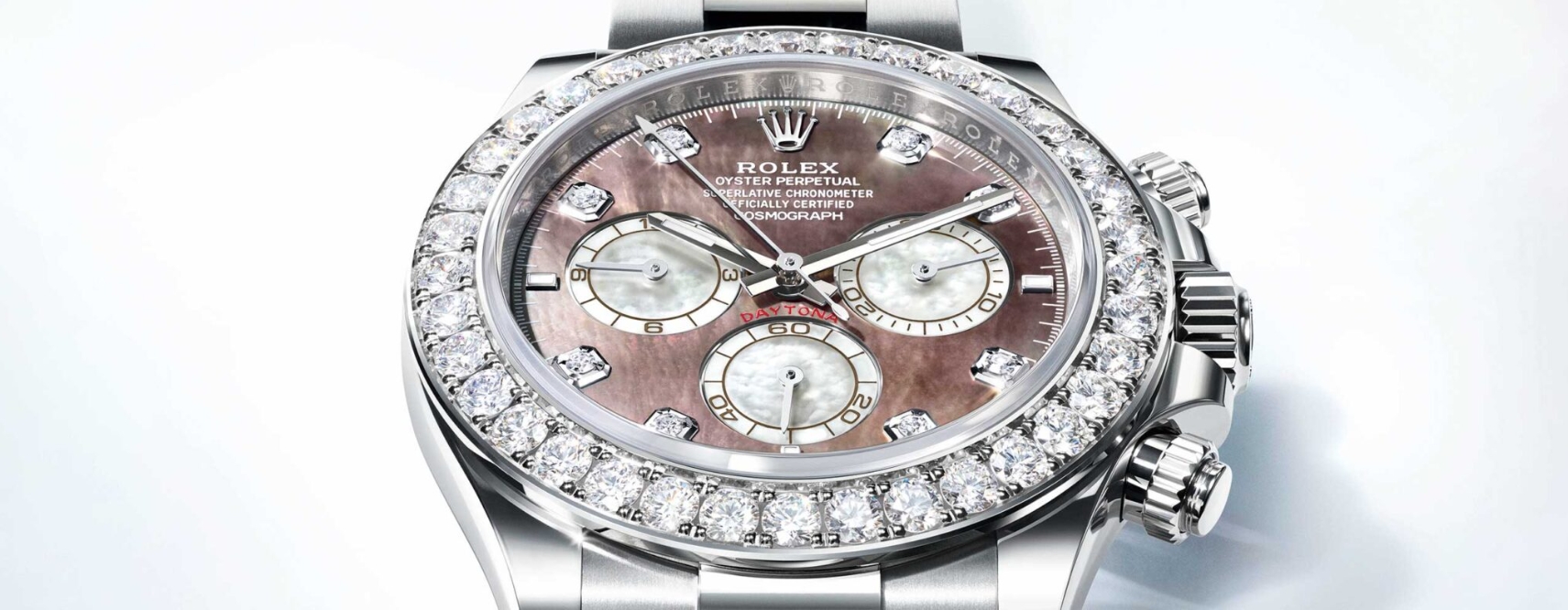
Rolex appears repeatedly in replica-watch discussions for a simple reason: its model families are unusually recognisable. The Submariner, Datejust, GMT-Master II, Daytona, Explorer and Day-Date each have a stable visual identity that has evolved over decades. That gives replica makers an obvious target and gives readers a large body of genuine references to compare against.
The previous version of this article tried to explain Rolex “domination” with precise production and revenue figures that were not properly sourced in the page, while also inserting replica keywords into statements about the genuine company. That blurred two different subjects. This revision focuses on the design and editorial reasons Rolex occupies so much of Pondwatch’s coverage.
Rolex models are recognisable from shape as well as branding
A Submariner is identifiable through its rotating dive bezel, Oyster case and bracelet architecture. A Datejust is defined by the date and Cyclops, with smooth or fluted bezel and Oyster or Jubilee bracelet options. A GMT-Master II introduces a 24-hour hand and bezel, while the Daytona has a three-register chronograph layout and tachymetric scale.
Those identities make comparison possible. A reader can ask whether a bezel font is too thick, whether a date magnifier sits correctly or whether a chronograph counter is in the right place. The analysis becomes more specific than “does this look like a Rolex?”
Long model continuity creates many generations to compare
Rolex usually evolves core collections rather than replacing them with entirely new design languages every few years. That continuity is valuable for replica analysis because small generation changes become meaningful: ceramic versus aluminium bezels, movement updates, case-profile changes, bracelet improvements and revised dial details.
It also creates a risk for low-quality content. Specifications from one reference are often copied onto another. Pondwatch’s updated editorial approach therefore starts with the exact reference or generation before discussing movement, dimensions or materials.
Replica quality is not the same across the Rolex catalogue
A simple three-hand Oyster Perpetual asks for excellent proportion and dial finishing. A GMT-Master II adds bezel colour, 24-hour function and date magnification. A Daytona adds a chronograph and more demanding dial geometry. It is not useful to rank all of them with one “best replica Rolex” label because the replication challenges are different.
Factory reputations can also change by model and batch. A workshop that produces a convincing case for one reference may not have the strongest dial or movement for another. Reference-specific analysis is therefore more durable than factory league tables.
Why this matters for a UK editorial site
Pondwatch is not trying to turn every page into a storefront. The stronger role for the site is to document how familiar watch designs are interpreted in the replica market, where the visible differences occur and which technical claims can actually be verified. Rolex supplies enough distinct model families to support that kind of coverage without forcing unrelated keywords into every article.
The site’s Rolex archive now reflects that direction: model observations, design comparisons and movement context first; seller language and unsupported superlatives second or removed entirely.